
The Battle of Polytopia
Midjiwan ABStrategy
4.419.06K Reviews
- Version
- 2.17.2.16299
- Installs
- 10.00M
- Age Rating
- Everyone 10+
Screenshots
Our Review of The Battle of Polytopia
 Analysis by Appyee
I found The Battle of Polytopia easy to underestimate. Its bright, compact presentation looks almost toy-like at first, but beneath the clean map is a serious turn-based strategy game about exploration, city growth, technology choices, territory control, and carefully timed battles. I spent most of my time making small decisions that became important several turns later, which is exactly why it works so well on a phone or tablet.
Developed by Midjiwan AB, this free strategy game lets me build a civilization and guide it across a limited map. It is available for Everyone 10+, has reached over 10 million installs, and holds a 4.4 average from around 236 thousand ratings. Those figures make sense to me: the game is approachable enough for a quick first match, yet it has enough tactical depth to keep inviting another attempt.
My review focuses especially on how comfortably different people can read, control, and understand the game in different situations. The colorful design is one of its strengths, but visual clarity, touch accuracy, pacing, and the need to process several kinds of information at once all affect who will enjoy it. The best experience comes from treating it as a thoughtful, flexible strategy game rather than a simple time filler.
Clear presentation, compact maps, and readable decisions
I like how the clean map keeps the focus on decisions rather than menus, but that simplicity still asks me to read several visual clues at once. This section looks at where the presentation helps and where a busy board can demand more attention than its playful style suggests. The key question is whether those choices stay comfortable on the screen you actually use.
Navigation that gets out of the way
The interface is one of the strongest parts of the experience. I can usually tell where I am, which unit is selected, and what actions are available without digging through layers of menus. That matters on a small screen, where a strategy game can quickly become uncomfortable if every decision requires opening panels and searching for information.
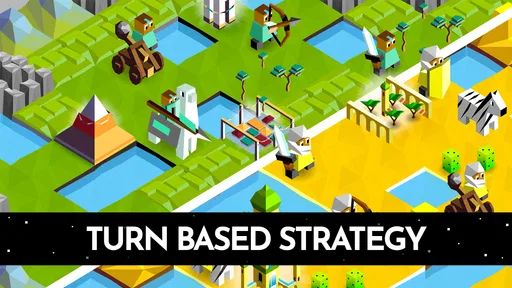
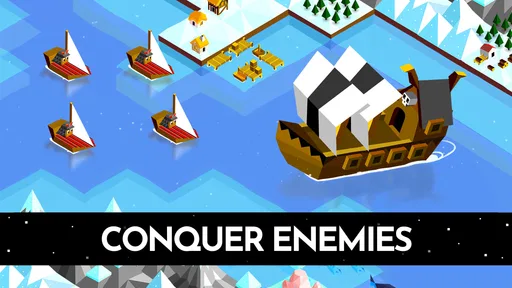
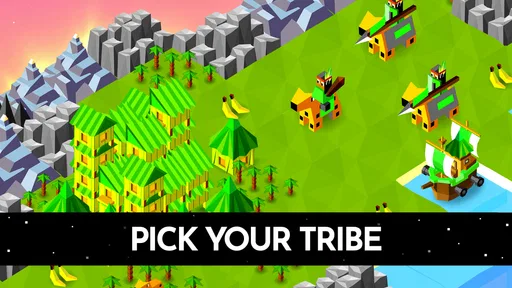
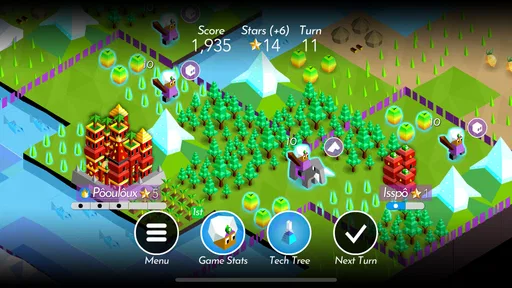
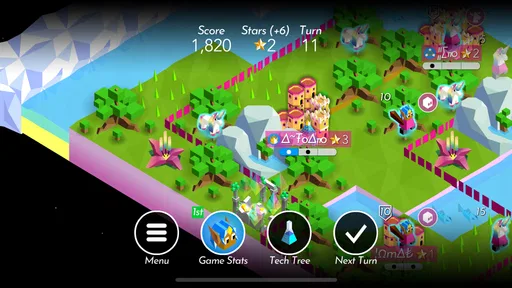
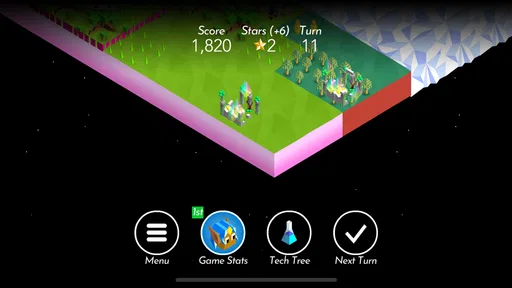
Matches are built around a map divided into small spaces. I move units, reveal unknown land, develop cities, and respond to nearby opponents. The visual language is deliberately simple: units and settlements are represented by distinct shapes and colors, while the map gives me a quick sense of ownership and distance. I do not need to read long descriptions before making a move, which makes the opening turns particularly friendly to new players.
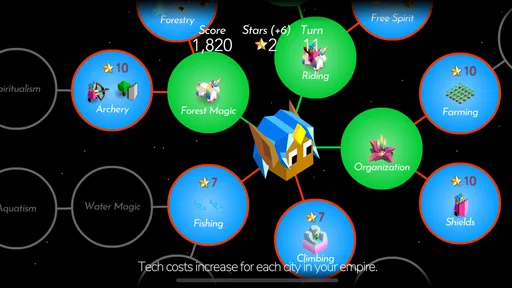
There is still a learning curve. The game presents a range of technologies and actions, and their value depends heavily on the map and the position of rival civilizations. A new player may understand what a button does without immediately understanding whether using it now is wise. That is a strategic challenge rather than a navigation failure, but it can feel like one during the first few matches.
I recommend taking the first games slowly instead of tapping through every option. Watch how a technology changes the shape of the map, how city improvements affect future resources, and how movement choices create or remove safe routes. The uncluttered interface makes these relationships easier to study than in many larger strategy games, where the amount of information can hide the important decision.
Readable information, with some visual pressure
The colorful art style gives each civilization and map a strong identity. It also helps me recognize ownership and activity at a glance. When several units gather near a border, however, the same compact design can become busy. Small icons, terrain details, and unit positions compete for attention, especially on a phone held at a distance or in a bright room.
For me, a tablet is more comfortable when I want to examine a crowded battlefield. A phone remains perfectly usable for short turns, but I am more likely to zoom in mentally by studying one region at a time. The game is not difficult to navigate, yet it rewards deliberate visual scanning rather than hurried glances.
Players who prefer large text, muted colors, or high-contrast interfaces should pay attention to this point. The visual style is central to the game, and its playful colors are not merely decoration. They carry information. That makes the presentation inviting for many people, but it also means that anyone who has trouble distinguishing similar colors or small map elements may need a larger screen and a quieter environment.
Learning through consequences instead of long explanations
I like that the game teaches much of its strategy by letting me see the result of a decision. Spending resources on a new ability can open a route, improve a settlement, or prepare a military push. The feedback is immediate enough to understand, but the larger consequences may not appear until later.
This makes the game suitable for someone who learns by experimenting. It is less ideal for a player who wants a complete explanation of every system before starting. I often had to accept a slightly imperfect first match, notice what went wrong, and use that knowledge in the next one. That cycle feels natural here, although people who dislike losing while learning may find the early experience frustrating.
Touch control, sensory comfort, and different play situations
Direct taps and turn-based pacing make the game easier to fit around a busy day, though neither removes the need for careful attention. I’ll consider how screen size, touch precision, and visual load change the experience, then turn to the everyday situations where its pause-friendly rhythm is most useful.
Simple controls with a need for precision
The touch controls are straightforward: I select units, choose destinations, inspect settlements, and confirm actions directly on the map. This is much more comfortable than trying to manage a traditional strategy interface designed around a mouse. The turn-based structure also removes the pressure of constant real-time movement, so I can think before committing.
That said, touch control is not automatically easy for every player. A crowded map can make precise selection awkward, and an accidental tap matters when it moves a unit or spends a turn. I found myself slowing down near enemy lines, particularly when several units stood close together. A stylus or a larger screen could help someone who finds small touch targets difficult, although the game remains designed around ordinary touch interaction.
This is one of the title’s important trade-offs: the controls are simple because the action set is focused, but the consequences of a mis-tap can still be significant. I would not recommend playing a tense match while walking, riding in a moving vehicle, or multitasking with another task. The game waits for me, but the map still deserves attention.
Turn-based pacing helps, but concentration still matters
The absence of real-time pressure is a major advantage for players who need more time to process information. I can pause between turns, reconsider a route, and inspect the position of several civilizations before acting. That makes it easier to play at my own rhythm than in a fast action game or a real-time strategy title.
However, turn-based does not mean mentally light. A good move may require checking available resources, estimating an opponent’s reach, deciding whether to explore or develop, and keeping a future attack in mind. Someone with limited energy or attention can still enjoy short sessions, but a long match may become tiring when the map fills with units.
My practical approach is to divide a turn into a routine. I first look for immediate threats, then check cities, then consider exploration and movement, and only after that spend resources on longer-term development. This sequence reduces the chance of forgetting a defensive action. It is also useful for players who benefit from predictable workflows rather than making decisions in an unstructured order.
Sound, color, and the sensory character of play
The game communicates much of its state visually, which is helpful when I want to play quietly. I do not depend on a constant stream of spoken instructions to understand the map. That makes it practical in places where sound must be low, such as a waiting room, a shared bedroom, or a public commute.
The reverse limitation is that visual attention carries much of the burden. A player who cannot comfortably distinguish map colors, unit symbols, or small changes in terrain may have difficulty extracting information quickly. I would approach it cautiously if visual contrast is a major concern, and I would favor a larger display where possible. The game’s friendly art should not be mistaken for universal visual accessibility.
It also suits people who dislike flashing, fast-moving interfaces better than many action-oriented alternatives. The map changes through deliberate turns rather than constant animation and reaction. Still, the density of a late match can create its own form of visual fatigue, so shorter sessions and occasional breaks are sensible.
Why the game works well in ordinary daily life
A realistic use case is a short break during a commute or lunch period. I can begin a match, make a few careful turns, and stop without losing the thread completely. The game’s structure supports that kind of interrupted play better than a real-time battle, because the next decision waits for me.
It is also a good fit for a quiet evening when I want something more engaging than a puzzle but less demanding than a large computer strategy game. I can focus on one border, improve a city, or explore an unknown section of the map without needing a full uninterrupted session.
On the other hand, it is not ideal when I have only a few seconds of attention. If I am standing in a crowded train, carrying bags, or repeatedly switching between messages and the game, touch mistakes and forgotten threats become more likely. The turn system protects me from time pressure, not from divided attention.
Strategy depth, purchases, and the barriers that remain
A compact match can still offer layered choices, while optional spending and visual or motor demands may shape whether it is the right fit. I’ll weigh those trade-offs against the appeal for different players, including when a larger, more customizable strategy game would be a better choice.
Small maps create meaningful trade-offs
The compact scale is both the game’s identity and one of its limitations. I can understand a match more quickly than a sprawling civilization simulator, but there is less room to recover from a poor opening. An early choice about exploration, technology, or city development can shape the entire match because every piece of territory matters.
I enjoy this pressure when I want a focused strategic contest. It encourages me to think about efficiency rather than simply accumulating everything. Yet players who prefer long economic arcs, detailed diplomacy, or enormous maps may find the experience too compressed. Compared with a traditional desktop 4X game, this is a streamlined contest where the important decision arrives sooner.
Compared with a casual puzzle game, it asks for more planning and memory. Compared with a real-time strategy game, it is calmer and easier to pause, but it lacks the immediate excitement of reacting under pressure. Compared with a board-game adaptation, it offers the convenience of automated calculations and a compact digital interface, while still preserving the feeling of occupying spaces and denying routes.
Free entry and optional spending
The game is free to start, with in-app purchases ranging from $0.99 to $4.49 per item. That lowers the barrier for someone who wants to test the core experience before deciding whether it belongs on their device. I appreciate being able to judge the pacing and interface through play rather than committing immediately to a purchase.
People who are sensitive to optional spending should still approach the purchase system consciously. Strategy games can make additional content feel tempting after a close match, especially when I want to try a different style of play. My advice is to decide in advance whether I am evaluating the free experience or planning to collect extras, rather than making an impulse decision after a loss.
The game is also a reasonable choice for families who want a strategy title with an Everyone 10+ age rating, but the rating does not remove the need for supervision around spending or competitive frustration. Younger players may understand the rules quickly while still struggling with delayed consequences and the emotional effect of losing a carefully built position.
Who should skip it
I would skip this game if I want a story-led campaign with detailed characters and constant narrative progression. The appeal is in the map, the decisions, and the changing balance between civilizations, not in following a cinematic plot.
I would also look elsewhere if I need very large controls, extensive spoken guidance, or a strongly customizable visual interface. The clean design helps many players, but it should not be confused with a broad set of accessibility options. Someone with motor difficulties may appreciate the lack of real-time pressure yet still struggle with precise map selection. Someone with color-vision differences may find ownership and territory harder to parse.
Finally, it may not suit players who dislike repetition. The pleasure comes from learning how different openings and map situations change the same basic strategic language. If discovering better routes and correcting previous mistakes sounds rewarding, that repetition is a strength. If every match needs a completely different structure, the focused format may feel narrow.
Practical habits that improve the experience
My first useful habit is to avoid spending every available resource immediately. Keeping some flexibility can matter more than making a settlement look stronger on the current turn. I also try to explore with a purpose: revealing land is valuable, but revealing a route, locating a rival, or identifying a productive area is usually more useful than wandering without a plan.
A second habit is to treat borders as information, not just lines on the map. The position of an enemy unit can tell me which direction is safe, which city needs protection, and whether an apparent attack is actually a distraction. Looking at the whole frontier before moving one unit prevents many avoidable mistakes.
A third is to separate learning matches from winning matches. In one game I may deliberately test an unfamiliar technology path or a risky expansion route. That makes failure informative instead of merely disappointing. Because the game is free and matches are compact compared with larger strategy simulations, it is well suited to this kind of experimentation.
I also recommend using a larger display whenever the map becomes crowded. The difference is not only cosmetic. A more spacious view makes it easier to compare routes, notice isolated units, and avoid tapping the wrong location. For anyone with visual or motor concerns, this is the most practical adjustment I found during regular play.
Long-term support and device expectations
The game first appeared on November 30, 2016, and the current version is 2.17.2.16299. It supports devices running Android 7.1 or later. That broad operating-system reach makes it easier to consider on an older compatible device, although actual comfort will still depend on screen size, touch responsiveness, and how clearly the map can be viewed.
Knowing the version is useful when troubleshooting or comparing experiences across devices, but the more important question for me is whether the hardware makes map reading comfortable. A phone that technically runs the game may still be a poor choice if its display makes small units difficult to distinguish. For this title, physical usability matters almost as much as basic compatibility.
My inclusive verdict after playing
I recommend The Battle of Polytopia to players who want a focused strategy game that respects their time. Its turn-based structure gives me room to think, its interface avoids unnecessary clutter, and its small maps make the consequences of each decision visible. It is especially good for someone moving from casual games into strategy, or for an experienced player who wants a compact alternative to a large civilization simulator.
From an inclusive-use perspective, its strongest qualities are the pause-friendly pace, direct touch controls, quiet visual communication, and short, manageable decision cycles. Those choices support people who need more time, prefer low-pressure play, or often play in changing environments. I can use it during a break, on a tablet at home, or in a quiet shared space without needing a long uninterrupted setup.
The remaining barriers are real. Crowded maps can strain vision, small touch targets can punish imprecision, and the game expects me to interpret color, icons, distance, and future threats together. It also offers less help to players who need extensive customization or step-by-step explanations. These are not reasons to reject it automatically, but they are important reasons to try it on the device and display I actually plan to use.
Midjiwan AB has made a game that feels simple without being shallow. I would install it for the free entry point, play the opening matches slowly, and decide whether the visual language works for me before considering any optional purchase. If you enjoy making careful decisions one turn at a time, this is one of the most approachable strategy games I have played on mobile. If you need a highly customizable interface, a rich story, or a huge simulation, another game will probably serve you better.
Verdict
Strengths of The Battle of Polytopia
- Quick matches make it easy to play during short breaks.
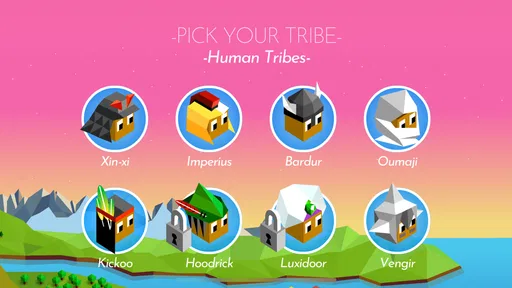
- Distinct tribes offer varied strategies and replay value.
- Simple controls are well suited to mobile screens.
- Offline play is useful when traveling or without internet.
- Regular updates and tribe content keep the game feeling fresh.
Limitations of The Battle of Polytopia
- Some tribes and features require additional purchases.
- Later turns can become slow on larger maps.
- The learning curve rises sharply against experienced players.
- Random map layouts may occasionally favor one player.
- Online multiplayer can be affected by connection issues.
Similar Picks in This Category
View All
Clash of Clans
Supercell4.5

Plants vs. Zombies™
ELECTRONIC ARTS3.7

Lords Mobile: Kingdom Wars
IGG.COM4.5

Clash Royale
Supercell4.4

State.io — Conquer the World
CASUAL AZUR GAMES4.1

Car Driving School : Car Games
Spark Game Studios3.9
Frequently Asked Questions
What is The Battle of Polytopia?
The Battle of Polytopia is a turn-based 4X strategy game for mobile devices in which you lead one of several tribes, explore a procedurally generated map, develop technologies, expand your territory, and compete against rival civilizations. Matches are divided into turns, making it easy to play in short sessions while still offering meaningful strategic decisions about movement, resources, research, diplomacy, and combat.
Is The Battle of Polytopia free to download and play?
Yes, The Battle of Polytopia can be downloaded and played for free, although the available content depends on the platform and version. The free experience generally provides access to core gameplay and selected tribes, while additional tribes or optional content may require purchases. The game does not feel like a simple trial, but players should review the current store listing for pricing, included features, and any in-app purchase details.
Does The Battle of Polytopia require an internet connection?
An internet connection is not always necessary for every part of The Battle of Polytopia. You can typically enjoy certain single-player matches offline, which is useful when traveling or when mobile data is unavailable. Online multiplayer, account-related features, updates, and some services do require connectivity. Availability may vary by device and game version, so checking the latest requirements before downloading is recommended.
Can I play The Battle of Polytopia with friends?
Yes, multiplayer is one of the main attractions of The Battle of Polytopia. You can compete with friends or other players through online matches, choosing tribes and attempting to outmaneuver opponents through exploration, technology, city development, and combat. Multiplayer games can take longer than solo matches because players may take turns at different times, so it is best suited to people who enjoy thoughtful, asynchronous strategy.
Is The Battle of Polytopia suitable for beginners?
The Battle of Polytopia is accessible to beginners because its colorful presentation, compact maps, and straightforward turn-based controls make the basic rules easy to understand. However, becoming skilled takes practice. New players must learn how to balance early exploration, economic growth, technology research, city expansion, and military defense. The game is a good choice for strategy newcomers, provided they are willing to experiment and learn from unsuccessful matches.
Play our best games!


